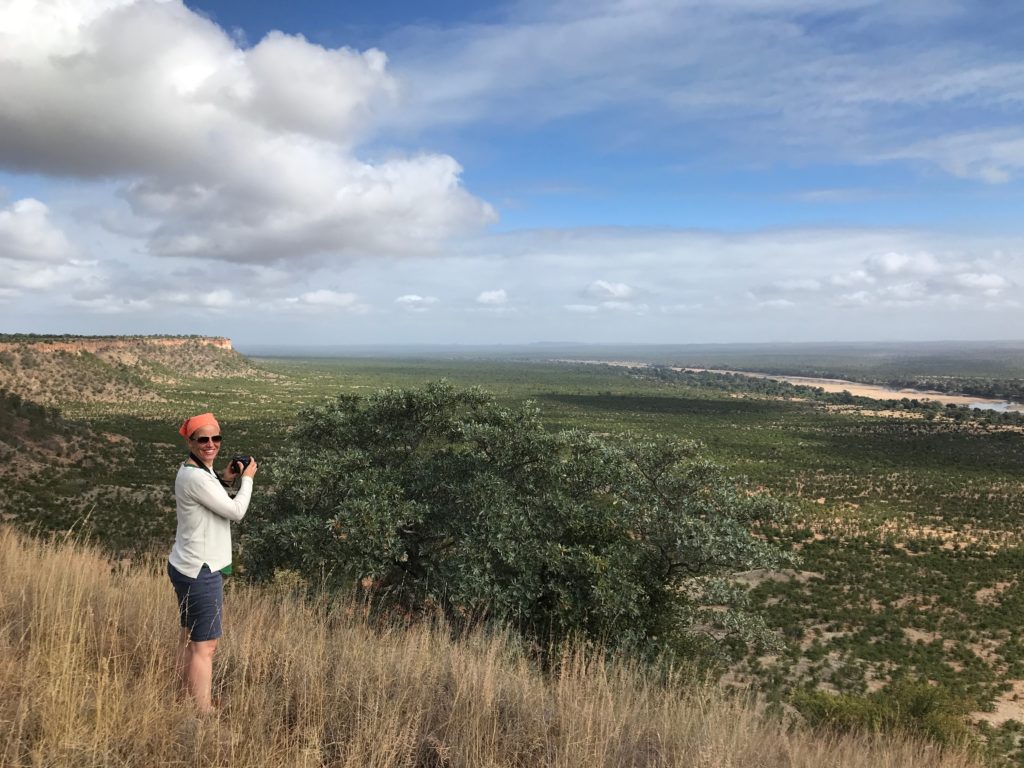
We all know northern Botswana and the fantastic wildlife areas of the Chobe and Okavango. But did you know that Botswana has a ‘toe’ in the south that is also a phenomenal wildlife haven where cheetah are seen almost every day, 92% of the year is rain-free and there are eight rivers for plenty of grazers to thrive?
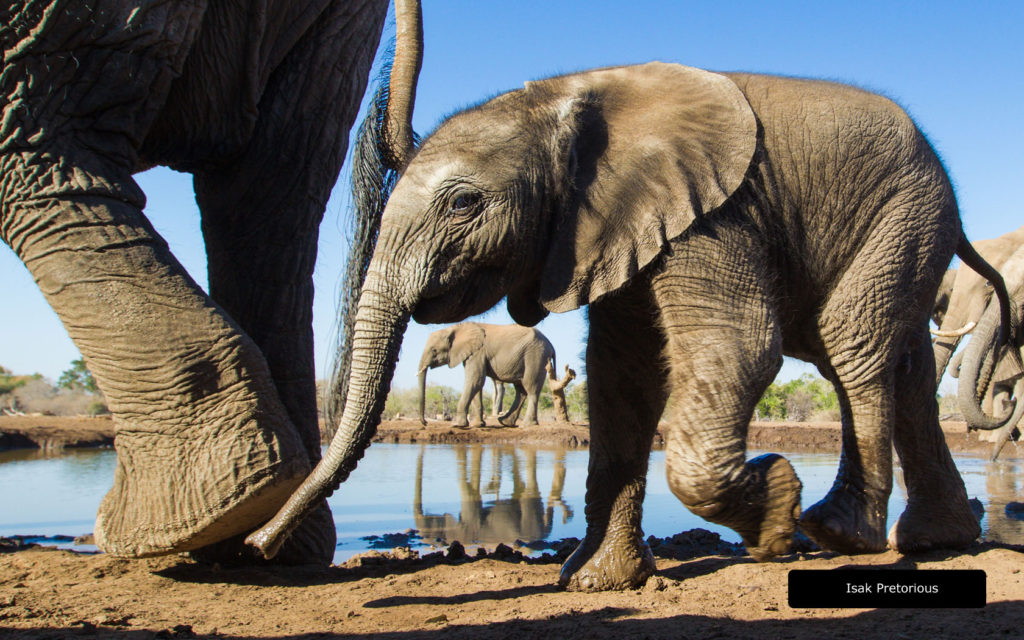
The ellies are the stars of the show at the hide’s waterhole.
Yes, Mashatu Game Reserve is in the part of Botswana that juts out to share a border with Zimbabwe and South Africa – just like a little toe! Here you find 29 000 hectares of unfenced private land – not a concession but privately owned by three generations. Over decades, careful land management has resulted in regular sightings of leopard, lion, cheetah (14 new cubs were born in 2019 alone), brown hyena, bat-eared foxes, African wild cats and honey badgers. Kills are also often observed as the wide-open plains lend themselves especially to cheetahs’ and lions’ hunting styles. We agree with Mashatu’s claim that they, ‘sell goosebumps’ and their exciting predator action is enough to give you (never mind the poor antelope!) plenty of goosebumps!
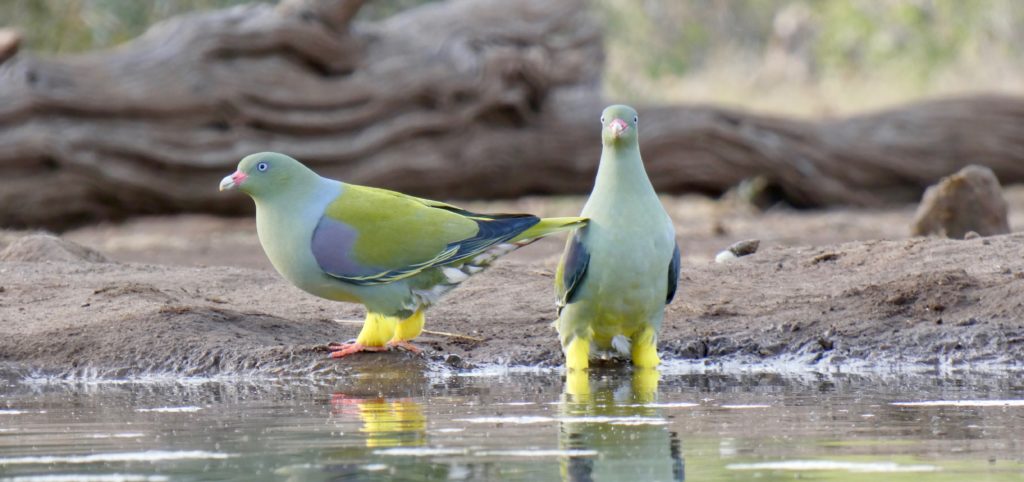
Mashatu is home to at least 700 giraffe and the largest recorded herds of elephants on private land in the world – between 200 and 300 individuals have been seen moving together. Bird nerds should look out for unusual species like Meyer’s parrots and green parrots. When it comes to spotting these animals and birds, you’re in the safe hands of the Mashatu guides, who have – on average – 14 years of guiding experience each. The trackers sit at the back of the vehicles so they can interact with the guests in the back rows. Once they’ve got five years’ tracking experience under their belts, they can move upfront.
The birding is spectacular!
In addition to game drives, there are multiple other ways of seeing Mashatu. Cycling safaris are easy because they follow the flattened elephant tracks (there is an age restriction of 12 and a back-up vehicle follows at a distance of two kilometres). Intermediate riders (must be able to canter with confidence) can saddle up one of the over 40 horses on the property and walking is also available.
If guests don’t feel like breaking a sweat, they can watch plenty of game come down to the underground hide where a professional photo guide is available to help them make the most of their cameras and phones. Beanbags, tripods and mounts are all for guests’ complimentary use.
Before BTTE 2019 in Kasane, we had the opportunity to do a fam trip with agents to Mashatu, where we were hosted for two nights by Kelly Evans. This is easily a 4- to 5-night stay destination as there is so much to see and do here.
We loved being on safari in this secret corner of Botswana and recommend incorporating it into an itinerary for your clients for the following reasons:
Flight connections between Mashatu and the Okavango Delta are now easier than ever, with seat rates available to travellers. It’s now much more convenient and cost-effective to fly into the south of Botswana.
Botswana Immigration – if you’re flying in from Zimbabwe or South Africa – is done at Limpopo Valley Airfield, where you’ll be queuing with a maximum of 12 other people. Our group had the immigration counter all to themselves and were done in 15 minutes. Of course if you’re flying from the Delta, you skip this step.
A private airfield means no queues at Immigration.
The game viewing is phenomenal. We saw two cheetah kills in two days as well as mating lions, stalking leopards and plenty of plains game. Kelly still felt the need to apologise that it was ‘quieter than normal’!
The variety of activities and size of the area make it a natural fit for a longer, more relaxing stay. In two days, we did two game drives, a bicycle safari and a morning in the photo hide, and STILL didn’t have enough time to get to the area’s fascinating archaeological sites or the horse-riding excursion.
Swapping four wheels for two at Mashatu!
The photo hide isn’t just for professionals. Superb Mashatu photo host, Aubrey, showed our group how to make the most of their iPhones for photography and composition – and we learnt about settings we never knew existed.
The elephants are the stars of the show at the photography hide.
With three properties on offer at different levels of budget, there’s a camp or lodge to suit everyone. Opt for Mashatu Tent Camp for entry-level accommodation, Mashatu Lodge for mid-range clients and Mashatu Euphorbia Villas (will open in May 2020) for those who want to splurge. The villas will have heated plunge pools, Wi-Fi and air conditioning plus views over the landscape.
There’s no ‘real’ Green Season here. You’ll find carpets of wild flowers from January to March but the grasses are still short and the rainfall is much less than in the rest of the country, making it a great option for small groups continuing to the Okavango Delta on private charter, or just doing Mashatu as a stand-alone.
The landscape and habitats are totally different to northern Botswana, lending a fantastic contrast to the Okavango Delta and Chobe National Park, both in terms of expected wildlife sightings and the landscapes to enjoy it all from.
If you want goosebumps and a huge thrill, Mashatu might be the place to find them!
Mashatu forms part of our 9-nights Best Kept Secrets Superior package – see how to link the Delta, Mashatu and the Victoria Falls for your clients here.
Imagine a place with trees so beautiful they make you ‘treedrunk’,
Imagine a place where around every corner a different antelope can be discovered,
Imagine a landscape diverse and exciting, from river beds and sandy beaches to open grasslands and forests,
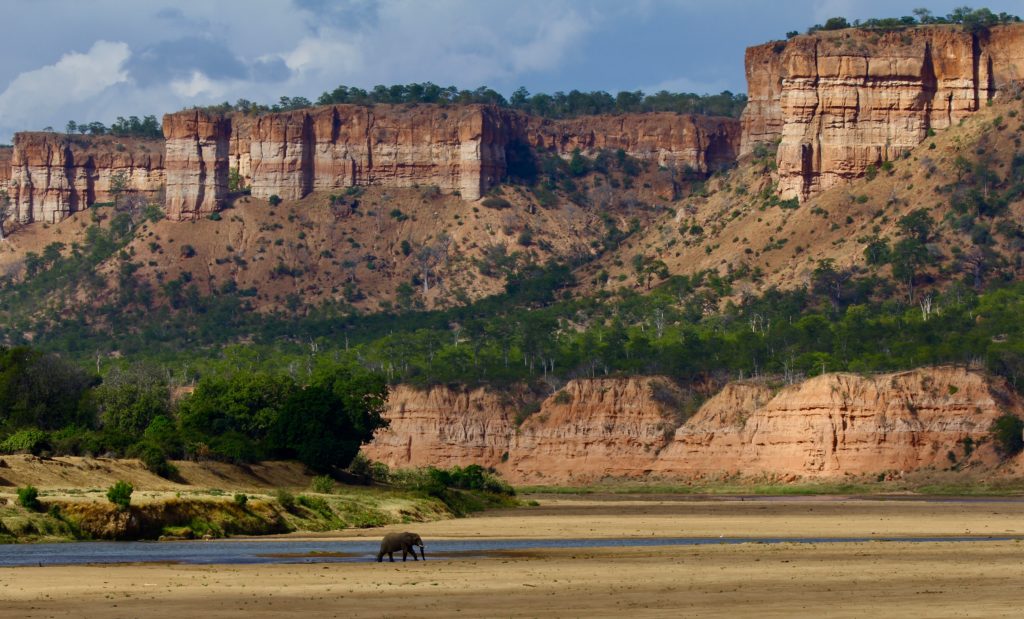
Imagine majestic elephants wandering in front of the bright red sandstone of the Chilojo Cliffs,
Imagine a completely untouched wilderness,
Imagine a community that understands the importance of protecting their heritage, their environment and especially their trees (the people in the Mahenye village rather walk for kilometres to collect firewood than cut down the trees around them),
Imagine a man who understands that for the local population to care about protecting wildlife, they have to benefit from wildlife. Clive Stockil is this man; he is the founder of Chilo Safari Lodge. Clive has dedicated his life to solving human-wildlife conflict. He is the father of CAMPFIRE (Communal Areas Management Programme for Indigenous Resources). He explains it this way: “If you are a conservationist, your problem is all about space, so deal with human pressures first. CAMPFIRE has turned conflict into co-operation and everyone has benefited. The community is happy, the parks are happy and the animals are happy. Everyone wins.”
Gonarezhou means ‘The place of elephants’. There are special places in Africa where you truly feel at one with nature. Gonarezhou is one of them. I was blown away by the diversity of fauna and flora.
The remoteness of Gonarezhou is a mixed blessing. Access to Gonarezhou is easiest from Harare via small aircraft. The flight takes around 90 minutes and arrives in Mahenye, which is the closest airstrip to Chilo Gorge. Clients flying in from Johannesburg are recommended to fly with Federal Air into Buffalo Range (currently two weekly flights on Mondays and Thursdays); the road transfer from Buffalo Range to Chilo is about two hours long.
Gonarezhou is the place to be if you want to be ‘treedrunk’
after only an hour of safari, never mind the multitude of birds we saw, the
incredible variety of antelope, buffalo, crocodiles and elephants. Just the
trees alone are intoxicating…
Imagine every few hundred metres a beautiful baobab, thick,
tangled riverine forests full of jackalberries, bizarrely bent rain trees,
stoic leadwoods, ruffled African mangosteens… It’s almost too much to process!
Think back to 2010… Nicholas Sarkozy was president of France, Barack Obama was the president of the US, Ian Khama ruled Botswana and Angela Merkel was chancellor of Germany (OK, some things change faster than others!). The best movie at the Oscars was The Hurt Locker (we had totally forgotten about that one) and the top songs were by Ke$ha, Train and Lady Antebellum (who, who and WHO?). There was no Instagram until October of that year, Nxai Pan and the Central Kalahari Game Reserve had no permanent camps, Natural Selection didn’t exist, and who would have thought that AirBnB or Uber would grow so quickly?
Things were very different then and no more so than at Safari Destinations. Our little company was just four years old. Our office was above Mack Air opposite the airport and we had about 15 staff, half of which are still with us today. 2010 was the year when Lorraine and I started searching for a new home for our business, which we found only a couple of kilometres down the road. We bought our new premises in 2011 and thought we would never need all the space – hahaha, were we wrong.
Angela, Carina, Caroline, Karen, Mothusi, Kay enjoying a scenic helicopter flight – remember the days of orange and green?
21st
century technology
In those long-gone days, most of us still worked on large desktop computers and used the small but efficient Nokia 5300 mobile phone. The fax machine still played a key role (remember how the ink faded right at someone’s phone number?!).
Kay, reservations manager, recalls the prehistoric days before the IT revolution, ‘We used to do everything ourselves: no personal administrators or fancy systems.’
Karen, reservation supervisor, who was the sixth employee to join in June 2008, agrees. ‘When I started, we were quoting manually using Excel and we were also doing all clients’ documentation manually, too, which used to take hours. Now, we have a clever system that works out costs and pulls documentation like invoices, vouchers and confirmations.’
The longest-standing staff at Safari Destinations agree that the biggest change the decade has brought is the colossal change in technology.
‘It really has changed my job in a big way,’ says Angela, Travel Experiences manager. ‘We used to carry a huge manual file with more than 60 Operations Reports when going to the airport to meet clients and, believe me, it was HUGE… Every time you received a call from a supplier, agent or client, you would have to find a little corner in the terminal and flip through the file as fast as you could in order to retrieve information. Today that big black folder has been replaced by a single tablet.
The SD team is growing… picture taken in 2011 in our new ‘home’.
The
Travel Experiences team
Angela
touched on another big change over the decade: the development of a specialized
and highly skilled Travel Experiences team that handles all client meet &
greets at Maun International, smoothing arrivals and departures, handling lost
luggage, welcoming clients and everything in between.
The Travel Experience team in 2020 makes a big difference to a client’s overall experience and are very appreciated by the rest of Safari Destinations. Kay and Karen remember having to drop consulting in order to race over to the airport to meet their clients, then race back again. ‘Back then, each consultant had to go and meet their own clients. There was no such thing as a “Travel Experiences” team. I must admit, I’m very happy we do now have a Travel Experience team!’, laughs Karen.
People first
But no matter how sophisticated the technology became, Safari Destinations always put people first and the years between 2010 and 2020 saw some incredible projects for staff and the community.
As a mom of two girls herself, Karen appreciates Safari Destinations’ focus on boosting the next generation. ‘The support the company offers parents who have children is one of my biggest highlights of the past decade. Allowing our children to physically be on the office premises in a cottage (known as the Kiddies’ House), being supervised, whilst we can work is a massive benefit.’ This development was ahead of its time in Maun (and actually the rest of the world) and support for working parents is a growing and welcome global trend into 2020.
After-school fun at the Kiddies’ House at our Maun office!
‘One of the biggest projects,’ says Lorraine, ‘is the vision to build a school and after-care facility for the Bana Ba Letsatsi (BBL) underprivileged children, a dream come true and a testament to the meaningful contribution Safari Destinations and our partners have made through tourism. The long-awaited building will be started in 2020.’
Other notable community-engagement projects include the start of the ‘Magic Bus’. This is a mini-bus that is sponsored by Safari Destinations and gives transport to especially the elderly of Maun, who may otherwise have to walk long distances to attend a clinic or go shopping.
The ‘Magic Bus’ is a regular on Maun’s dusty roads.
To celebrate Botswana’s 50 years of independence in 2016, staff took part in the ‘500 Man Hours’ project that encouraged them to collectively give 500 hours of time to community projects. Today, Safari Destinations works closely with the Maun Animal Welfare Society (MAWS), Women Against Rape (WAR), Bana Ba Letsatsi (BBL) and many others. Many in the industry are also aware of SD’s work with Sekgoma Primary School, the bed night bank, Travel for Impact and various drives for donations of winter clothes, blankets and foodstuffs.
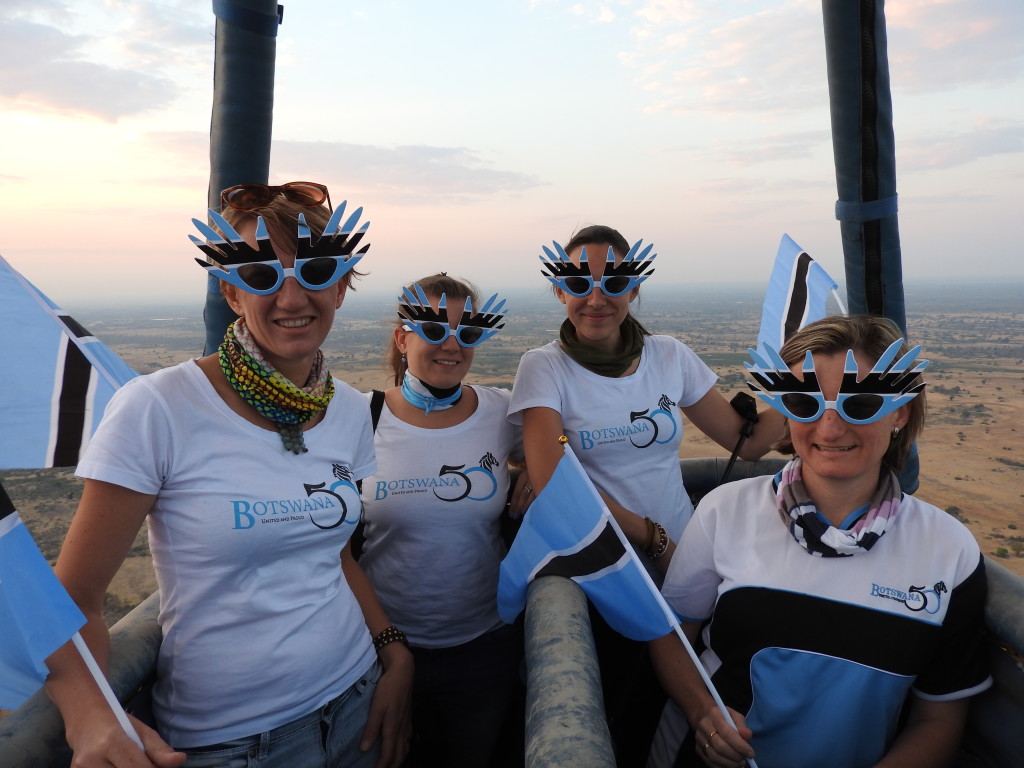
Storm, Scarlet, Amandine and Karen celebrate Bots 50 ballooning over the Delta
‘People’ also refers to how Safari Destinations finally started employing the so-called ‘stronger sex’ (ha! Us ladies change tyres, set up tents, dig game-drive vehicles out of sand AND give birth!). ‘The number of men employed is also a big change. In 2008, when I joined, employing men was not in the pipeline; however, once more women joined the company, there was a definite need for some male company!’, jokes Karen.
The weaker sex? Lorraine and Carina changing a tyre!
A maturing industry
As Safari Destinations grew from a toddler to a teenager over the decade, the broader safari industry also matured radically. Everyone agrees that far more players have entered the market, bringing fresh ideas and new people, and making every supplier raise their game to stay competitive. Often this had meant a new level of luxury: wine cellars, Wi-Fi, media rooms, gin bars, specialist spa treatments and à la carte dining were all virtually unknown in 2010.
As Angela says, ‘Suppliers have had to keep up with trending luxury décor in order to stay relevant while not destroying the authenticity of the camps or environment.’ ‘Yes,’ says Karen, ‘More properties are popping up, which means new players as well. The upgrading or rebuilding of a lot of properties to a very high-end level means some products are far more luxurious now than ever before.’
And keeping
up with times means the decade also saw huge shifts in how it uses technology.
‘Smart-phone technology and websites being a go-to place for people to do research has been a big change. There is so much more access to information now,’ adds Karen.
‘Social media is a plus. It makes it so much easier for all concerned to get the message out there and also for clients to dream up and plan exotic holidays. Wildlife documentaries, viewed across the world, are also a plus but trying to get an 8-10-day trip to compare with a documentary that is five years in the making, is sometimes challenging, to say the least! Luckily, we rise to the challenge!’, laughs Kay.
‘The rise of social media over the past decade has changed many things,’ agrees Andrea. ‘In some ways, thanks to smart phones and social media, travel is less about the experience of being in moment now and more about what you can post to Instagram later… Every camp now needs a few corners that are highly Instagrammable. It’s the same with some sightings: if the light is low or branches are in the way, then there’s no point in stopping for a photo for some guests. Some clients want the exact experience they’ve seen on Instagram – unfortunately, the elephants aren’t trained to drink from the same swimming pool at the same time every single day!,’ she jokes.
The next generation at SD: Andrea’s daughter Zoe is turning 9 this year 🙂
‘Social media also allows for a lot of information, which is a good thing as Karen says, but sometimes that information is put out by amateurs who get things wrong. TripAdvisor is now a staple source of information for clients that they trust without knowing the full story of a stranger’s holiday – a good camp may get a bad review for something beyond their control. As professional consultants and experienced experts, knowing what product would suit which clients is a skill that cannot be replaced by a single TripAdvisor post.
As Kay says, ‘with more and more beautiful videos and photographs appearing online every day, we need to remember that they represent just one moment of a safari. A photographer chooses a single perfect image from a whole journey. For us, the fun and excitement remains in finding sightings, having great guides, smelling the wild sage, hearing the bulbuls call to each other and seeing remarkable landscapes – not in reducing it all to a few pixels on a screen.’
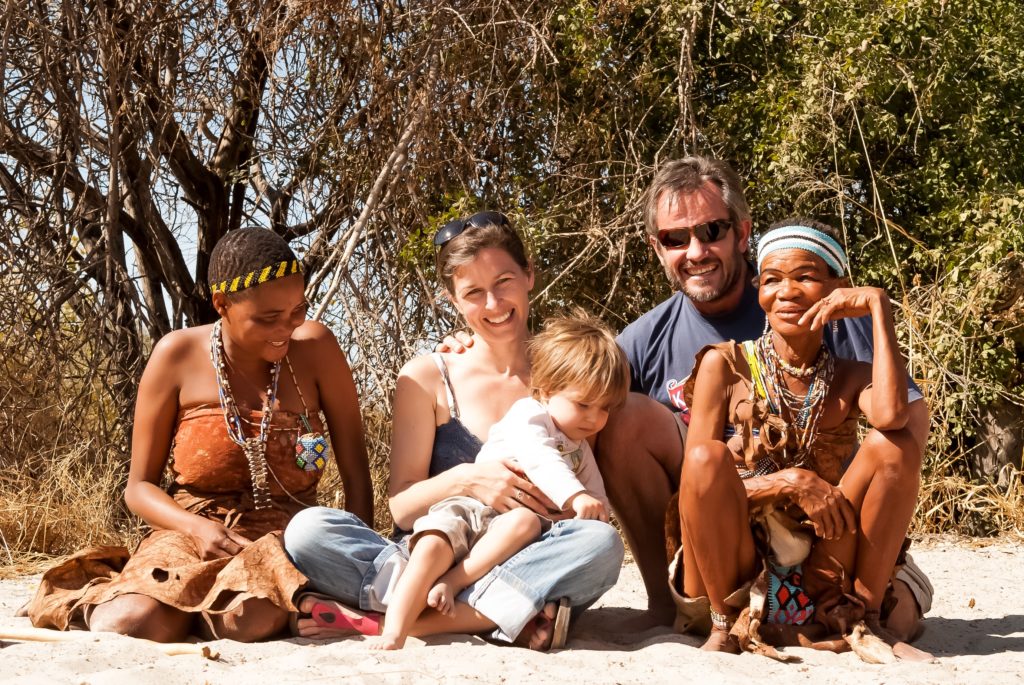
Angela walking with Bushmen at Meno A Kwena.
A decade of good laughs
While it’s never easy to grow a business from strength to strength, it is certainly made a lot easier if everyone has a good sense of humour. The Safari Destinations employees who’ve been around since 2010 and before have shared plenty of jokes and funny anecdotes over the years.
Kay groans at some of the crazy requests… ‘We’ve been asked to provide a double room with a sea view at the Victoria Falls Hotel! Once a client was disappointed because they couldn’t take a mokoro from Nxamaseri to Tsodilo Hills to see rhino!’ ‘Oh, that’s nothing,’ says Karen with a straight face. ‘I was once asked if the clients would be able to see unicorns on safari…’
Travel is a big and often stressful part of our jobs as we have to see as many properties as possible, make extensive notes, take photos (and videos now with our phones – unthought of in 2010!) and remember countless names, numbers and facts. But even educational travel has it’s funny side: Lorraine and I were once hosted at Baines’ Camp by Sanctuary Retreats.
‘They ran us a romantic bubble-bath following the afternoon activity that we had no choice but to use. So, we had fun taking a picture of the two of us fully dressed in the bath!’
We’re all looking forward to seeing what advancements, achievements, jokes and memories the next ten years will bring us!
Safari Destinations has grown from a simple idea in 2006 to a highly successful DMC. And while we sell exceptional safaris to see beautiful landscapes and breathtaking animals, the real backbone of the company is ensuring all staff receive in-depth training and continuous development, about our systems, products, destinations, suppliers, agents and source markets.
Certified knowledge in complex destination training!
Day 1 at Safari Destinations …
We don’t
believe in throwing staff in the deep end and leaving it up to them whether
they sink or swim. That helps no-one: not us, not their team members, not our
agents and definitely not our new staff member. We invest a lot of time and
energy attracting quality people to Safari Destinations and we like to get
return on that investment.
All administrators
in the Reservations department work in an ‘apprenticeship’ arrangement with a
more senior consultant or team leader, with ongoing feedback. Performance reviews
are held every three months for the first six months of learning the ropes, and
admins are coached in every aspect their role. These regular, formal check-ins
every three months are company-wide for all new staff members, ensuring that
everyone is reaching their potential as much as possible.
We keep
our promises
Our business hinges on us being experts on all aspects of travelling to Botswana and Zimbabwe and creating inspiring travel experiences. We promise our agents that we are experts, and our in-depth training and development helps ensure we keep our promise. All staff regularly attend external supplier training about their products, brand and offerings. We have an in-house trainer specifically for destinations and further in-house supplier training plus lessons on sales, product and itineraries. These sessions are facilitated by in-house specialists, providing an opportunity for our seniors to hone their training and development skills through support from the HR department.
Tlotlo leads training in the garden of the Maun office.
A chain
of success
Once a
senior administrator, who has successfully handled all behind-the-scenes aspects
of complicated bookings, is ready to move onto becoming an associate
consultant, she (or he!) will join a consultant-in-training programme. This
equips them with the ability to understand and communicate with agents of
different markets; create inspiring itineraries; and write persuasive and
factual motivations. Once again, team leaders and senior consultants are on
hand to guide, correct, educate and mentor.
We live it
A big part of our promise to be experts is to have first-hand knowledge of all sorts of safaris, from five stars, to mobiles, to self-drives. As many staff go out as much as possible on educationals – this is a vital part of developing a critical eye (when a lodge is due a soft refurb, for example); learning how to compare products (which will deliver better value even if it costs more?); and how to assess which product suits which type of traveller and market best.
Onward and upward
Everyone likes to grow and feel like their careers are moving forward. Because of this, we’ve created defined steps on the career ladder in the Reservations Department:
Safari Assistant
Administrator
Senior Administrator
Relief Administrator
Associate Consultant
Intermediate Consultant
Senior Consultant
Team Leader
This is
carefully staggered to ensure that everyone who is promoted can cope with an
increased workload, heightened responsibility and an increased need to
supervise other staff, helping them in turn with their growth and development.
We make sure no-one feels overwhelmed by their new role but rather excited and
motivated!
In this
way, Safari Destinations builds supervisory and management capacity, preparing
those staff with potential, talent and the interest for promotion.
IT is
it!
We’ve come
a long way from manually creating booking packs. Today, all staff are fully
computer literate and up-to-date with major industry programs like TourPlan and
WETU. We also track our tasks, diaries and bulletins through Bitrix, and
actively use Skype to keep in touch with our staff and agents around the world.
Our success stories
Obviously, since starting in 2006, we had many, many success stories and plenty of proud moments where our wobbly impala newbies are now super-fast adults outrunning all manner of deadlines, requests and crises! These are three recent success stories:
Roxanne After a number of
years in camp management and running her own business with her husband, Roxanne
joined Safari Destinations in May 2013 as an Intermediate Consultant. She was
then promoted to Senior Consultant while also expanding her family with two of
the most delightful little boys. Roxanne was promoted to Team Leader in September
2019, having participated in management training and being mentored by Storm
Keen, previously a Team Leader. In just over six years, she has risen to the
leadership cadre of SD!
Roxanne (right) learning more about Kanana.
Keba In February 2016, Keba started as our receptionist as this was the position open at the time. We soon realised that she had lots of potential and, with her degree in Tourism, she was moved into Reservations as an Administrator. She steadily advanced up the ranks and was soon appointed as an Associate Consultant. Keba worked closely with Storm in terms of her development. Once Keba reached the level of Relief Administrator, she has started to be involved in our consultant-in-training programme, which exposes admins to putting itineraries together as well as sales training. We have loved watching her growth and development as a professional and value the passion she brings to her work.
Keba making new friends at the Pangolin Chobe Hotel!
Resego Resego started off at SD in December 2015. She swiftly advanced through the Administrator ranks and was appointed as Associate Consultant in 2018. By 2019 she was an Intermediate Relief Consultant. Relief Consultants are vital as they support those consultants on maternity leave (we have a lot of SD babies, being a team that comprises 80% women), or who are sick or on annual leave. This position is an excellent development opportunity, giving Resego exposure to working with different agents and different markets. She is also our top scorer in our destination training exams, having scored no less than 90% on all her assessments!
Resego on educational at Chobe Elephant Camp.
Because
of our carefully calibrated training and development programme we can not only
deliver exemplary service to our agents but we also ensure that our team are
empowered, challenged, rewarded and inspired to be the very best they can be.
I often get asked which places I would recommend for a relaxed armchair safari. Safaris can be exhausting: early mornings to catch the predators hunting, late nights watching ‘bush TV’. Having done numerous safaris and often rushing from one place to the next to make sure we know all the camps we are offering, I came to realize that a slower pace is the way to go. If clients insist on seeing many different areas they often don’t have enough time to stay three nights in each camp. In this case, I highly recommend adding the occasional ‘armchair destination’ into the itinerary, where guests can enjoy an afternoon spent in camp, watching the animals from the comfort of their lodge.
Carina enjoys an armchair safari in Nogatsaa.
Pick #1: Meno a Kwena Tented Camp, Boteti River, Botswana
This camp has been one of my favourite places since about 2004. It is situated above the Boteti River, offering stunning views of Makgadikgadi Pans National Park. Its unique location guarantees outstanding game viewing from camp. All tents are built along the edge of the cliff. The best time to travel is between April and November when the zebra migration arrives along the Boteti in search of life-giving water. The camp offers an authentic San Bushmen nature walk, full-day trips into the Makgadikgadi and, for guests that stay a minimum of three nights, a sleep-out under the stars in the middle of the vast nothingness of the salt pans can be booked.
Zebra and elephants on the banks of the Boteti Riverbelow Meno A Kwena.
Nogatsaa had been on my list of camps I needed to visit since its opening. Years ago, I had been camping in this very remote part of the Chobe National Park and loved the area since then. When the owner of Ghoha Hills told me about his plans to build a safari camp in Nogatsaa I was super-excited. The camp is situated on the edge of the Nogatsaa Pans, which have water pumped into them throughout the dry winter months. The pan is one of the few reliable water sources in this harsh area, making it a hot-spot for large herds of elephants. It is the perfect spot for a relaxed armchair safari: guests don’t need to leave camp, they can watch the animals come to drink. We saw hundreds of elephants, buffalo, giraffe, roan antelope, waterbuck, kudu and even a resident baby hippo during our stay. Access to the camp is by road from Kasane; the drive takes about two-and-a-half hours.
A breeding herd in front of Nogatsaa Pans Lodge.
Pick #3: Deteema Springs Camp, Hwange National Park, Zimbabwe
Deteema Springs opened in May 2019 and is the second addition to the Machaba Safaris’ portfolio in Zimbabwe. The camp was built on the old Deteema Picnic site, a very popular spot with Hwange visitors. The national park authorities asked that the design of the new camp incorporates the old picnic site and the architects did an excellent job. This tented camp is super-comfortable and offers amazing views over the springs and towards Deteema Dam. Guests can skip an afternoon activity and enjoy the comfort of their veranda to watch the elephants come down to drink from the fresh-water spring.
The view from one of the Deteema Springs’ tents.
Pick #4: Savute Elephant Lodge, Chobe National Park, Botswana
The Savuti region in the Chobe National Park has been especially famous for its large lion pride, the Marsh Pride. They had to adapt to the super-harsh environment of this intriguing place in order to survive. This group of sometimes up to 30 lions have become experts in hunting elephants – a spectacle that can’t be guaranteed but one that anyone who has witnessed it will never forget. Savute Elephant offers its guests a comfortable place to relax and enjoy the environment. The hide underneath the terrace and pool offers amazing views over a busy waterhole that gets pumped all year and attracts lots of animals during the day and night.
The hide at Savute Elephant Lodge offers stunning views over the waterhole.
Pick #5: Kanga Camp, Mana Pools National Park, Zimbabwe
Kanga Camp lies hidden in the backland of Mana Pools National Park. Its unique attraction is the super-busy waterhole right in front of camp. The animals know that Kanga Pan is the only reliable source of water in the area and they make use of that knowledge. Guests can enjoy a delicious lunch on the main deck while watching the elephants come to drink. This authentic bush camp consists of six comfortable tents and guests get a true bush feeling in this remote part of the park.
Elephants walking past the main deck at Kanga Camp.
Tucked away in the Khwai Private Reserve, Tuludi from Natural Selection has access to 200 000 hectares of land to explore… so we went exploring!
Overall impression
Tuludi is
stunning. Every small detail has been thought of while putting the lodge
together. The main area offers so many different places to sit – the problem is
that they are all very welcoming so the choices seem endless! All these
different seats have different views of the area surrounding the lodge.
Rooms have large plunge pools and outdoor bathtubs.
The whole lodge, including the staff, is premier material. Food is à la carte with a good number of choices that are out of the ordinary but tasty. The rooms are spacious and restful yet romantic with outside bathtubs. The family room is stunning. In fact, the whole camp is family friendly especially with the fun addition of the slide in the main area!
Tlotlo is testing the Tuludi slide
The vehicles are so
comfortable that no bumpy road can ruin your game drive. They also have an
elevated hide overlooking water for lunches or dinners.
Comparative value and experience
Tuludi offers a chic modern style, some of it’s design elements are unique, like the bar, made of thousands of mosaic pieces – stunning artwork. This new camp has the air of a premier camp at more classic rates, it would go perfectly well with the likes of Kanana, Nxabega or Xaranna. I can also see it being combined with Ngoma Safari Lodge, Belmond Savute Elephant or the new Selinda Camp.
The handcrafted bar in the mess tent.
Ideal clients
This lodge is definitely for clients wanting a luxury safari who love their comfort. It’s also good as an upsell for honeymooners. Tuludi is a good family camp for children aged six and over but a private vehicle must be booked in this case.
Tents are large, bright and eclectically furnished.
Seasonality, wildlife and activities
Tuludi is one of four camps in the vast Khwai Private Reserve. Only vehicles of one of the four camps are allowed to gamedrive in the area, making it an exclusive experience. The main source of water is the eastern-most finger of the Okavango Delta, the Khwai river, which attracts large herds of elephant and buffalo. The permanent waterholes are home to resident hippos. During rainy season the floodplains fill up, changing the landscape from open grassy floodplains to lilly-filled lagoons.
Clare and I were among the first to visit the ‘new’ King’s Pool Camp, which has been given a very impressive make-over…!
The new rebuild of King’s Pool is looking fantastic. They have used a lot of earthy colours such as browns, beiges, golds and black, which give a really refreshing feel to be somewhere completely different to the Delta.
The new main area at King’s Pool.
From the main area and all the rooms, you have a lovely view over the
Linyanti Swamps, teeming with hippos and crocodiles.
One of the special treats of King’s Pool is their very own in-house masseuse, who will spoil you with a massage on the deck of your room overlooking the swamps, for total relaxation in your siesta or after a hard day’s game driving.
The lodge has the advantage of driving along the riverbed in the late afternoons where you don’t have to search for any game, as hordes of different species come down to drink in the heat of the afternoon.
We were lucky enough to watch crocodiles displaying mating behaviour plus see hundreds of elephants, roan and sable antelope among other plains game.
The landscape and habitats are completely different to the Okavango
despite the Linyanti Swamps being a Delta system of their own; they are
completely separate to the Okavango.
Driving the river’s edge in the afternoon is a completely different
experience to driving further back in the mopane woodlands in the early
mornings looking for more predators. It gives a complete contrast of habitats.
This area is well known for its large herds of elephants in the dry season: it did not disappoint in that regard as we encountered huge breeding herds.
Another highlight of this camp is the two hides. One is underground in
front of the water, meaning you are looking out at ground level up at the
gentle giants that dominate this area.
Rooms have views of the Linyanti Swamps.
King’s Pool suits first-time safari goers as it is an easy comfortable safari experience. Everything is pretty much thought out for you and not too much energy is required. Those first-time Botswana travellers who have heard about our large elephant populations, but don’t want to do the crowds of Chobe and have the Premier budget, would fit King’s Pool perfectly as they still get the barge on the river and game drives, all in the exclusiveness of a private concession. You have the flexibility of game drives, boating, walks and sitting back in one of the two hides relaxing with a gin and tonic, watching the animals coming down to drink.
Clare and Storm at King’s Pool.
The best months to explore this area in a typical year is July to October as the food resources and excess surface water from the rainy season have dried up, pushing the big herds into the Linyanti Swamps area to greener pastures and permanent water sources. In the Green and shoulder seasons, although the big herds will move out, the predators remain because they’re territorial, and the antelope that remain give birth to their young, meaning lots of babies around that make for easy pickings for the lions!
We stopped at Kwara Camp in the famous Kwara Reserve in September 2019, just after it reopened after a complete rebuild. The new camp is bigger and more luxurious than the old one: there are nine tents (including one for mobility impaired guests), two swimming pools and private vehicles available.
What was your overall impression of the camp? Please highlight the unique selling points.
Sue Smart of Kwando
Safaris was there to show us around and she is clearly very proud of the new
addition to the Kwando portfolio – quite rightly so! This new lodge is lovely
and the feel is classic 50’s safari style with contemporary touches: elements
of décor like old trunks, framed photos of insects on the wall, a brass
telescope, fabrics depicting plants and animals mixed in with a modern light
fitting and bar stools, for example.
Every small detail has
been thought of and geared towards a more demanding, sophisticated and mature clientele. The
lodge is definitely not child friendly – the minimum age is 18. The main area is
constructed on different levels and offers various places to sit, play games,
read, write, lounge, drink and eat. The rooms are huge and include a proper
lounge area with a sofa, armchairs and coffee table, a king-sized bed wrapped
in a mosquito net, en suite bathroom with lots of packing space and surface
areas on which to put toiletries, a vanity, bathtub, enormous rain shower heads
in the indoor and outdoor showers, and a large deck with table and chairs. The
linen looked first class, too.
The guest tents at Kwara are substantial and very comfortable.
The room I saw was for clients with mobile disabilities was all on one level. The others are identical but have a sunken bathroom. The rooms have solid walls and wooden doors and yet there is a canvas feel to it (good for clients who don’t want to sleep in a ‘tent’). I love the fact that there are two good-sized swimming pools at each extremity of the lodge so they will never seem overcrowded nor in full view of the main area. Each pool area has a ‘clubhouse’, which has a fully stocked fridge, tea/coffee-making facilities, armchairs and a ceiling fan. There are four deckchairs on one side of the pool, facing the bush.
How does the camp compare to similar camps in terms of value and
experience? Are there any notable special offers applicable?
I feel that Kwara Camp is good value for money. Being a four-star classic camp, it is super comfortable but not as luxurious (or as expensive), as Tuludi or the Wilderness Classic camps. Long-stay rates are always a plus at Kwara and as long as you stick with a minimum of three nights, the Five Rivers package can include Kwara. Please remember that a minimum stay of three nights is necessary, and honestly spoken this concession justifies at least a 3 nights stay, ideally even longer.
How would you combine this camp in an itinerary and why?
The camp covers land and water activities, I would combine it with a camp in a completely different area such as Savute or Makgadikgadi Pans. Or in the Linyanti, the obvious choice would be Lagoon or Lebala Camps because of the reduced long-stay rate.
The main areas are light and airy.
What type
of clients does this camp suit and why?
This lodge is definitely suited for higher-end safari goers, seeking an authentic, good quality safari in one of the best concessions in the Delta. It comes with lots of creature comforts but not over-the-top luxury: groups of friends, couples, families with adult children (minimum age is 18 years), repeat clients and honeymooners would all feel comfortable here. It is also suited to those who want solid walls, and windows and doors that open and close (not tents or canvas).
How does
the seasonality of the area change through the year and what effect does it
have on a visitor’s experience, with specific reference to wildlife and
activities?
This huge private concession borders the Moanchira channel, which has permanent water so boating will always be possible, whatever the season. Game is super-chilled and plentiful. Moremi Game Reserve is just on the other side of the channel so lots of animals cross backwards and forwards throughout the year. If the low water levels in the Delta persist into 2020, the Kwara Reserve will be a big draw as this year water in the upper Delta is more plentiful and reliable.
The
Okavango Delta is an incredibly dynamic ecosystem. Its fluctuating water levels
cause vegetation and habitats to adapt accordingly in very short time spans.
The Delta has historically always experienced wet and dry spells, which last roughly 30 years each. We are currently in the tail end of a wet cycle and the
exceptionally low rainfall beginning of this year is not unusual according to
historical data. Tentative
weather predictions are
looking positive with better rains this year and a bigger
flood in 2020.
A classic Botswana summer thunderstorm.
The current drier conditions we are experiencing are, almost counter intuitively, not bad news. During our exceptionally high flood levels in the early 2000s, large tracts of the Delta were flooded for longer periods of time. This meant that the grazing that occured on the floodplains once the water receded was no longer available for the herbivores and the nutritious grass was replaced by unpalatable sedges (types of mostly perennial but sometimes annual herbs that have a ‘tuft-like’ appearance). This has meant that herbivore numbers actually declined over this period even though the Delta was at its fullest and prettiest.
This year’s exceptionally low floods mean a lot of those floodplains have become accessible and the sedges will die back so that grass can grow again, making the land once again suitable for grazing. The herbivore populations will increase thanks to the extra food, which in turn positively affects the predators. So, while there may not be picture-book Delta water activities everywhere, there has been exceptional game viewing instead.
The upper or northern Delta has received its usual annual floods, albeit in lesser volumes, which means that conditions there haven’t changed as much.
The lower or southern Delta is affected the most due to the lack of
flooding but the newly available grazing will only enhance
the game-viewing experience. The reason for
this distinct shift in flooded areas between the upper and lower Delta is most likely directly related to the big earthquake Botswana
experienced in 2017. Due to the sandy substrate the Delta lies on,
even a small shift is enough to divert water
flow.
This cycle
should see an overall improvement in the amount of grass available as the
water-loving sedges die down, leading to the exciting game viewing we all enjoy
so much.
With great grazing comes great predator sightings.
We have long loved the Panhandle and have always considered it a secret gem. It’s a wonderful ‘new’ destination for clients who would like guaranteed water activities like mokoro and boating as well as a gateway to the Tsodilo Hills.
Access
A
70-kilometre watercourse that starts at the Namibian border before spreading
out into the Okavango Delta, the Panhandle offers year-round water.
Value-for-money lodges and more affordable transfers are now making it
extremely attractive. Access used to be a prohibitively expensive but now it’s
on par with any other Delta flight, making it a serious option for more
cost-conscious bookings.
Experiences
The water
experience is unrivaled: guests glide silently through the channels on a mokoro,
absorbing the peace, quiet and lush greenery. They can
also head out on a high-speed motorboat to experience the vast space opening up
in front of them.
The lagoon at Setari
Tigerfishing is a famous and exciting activity in the
Panhandle, as is angling for bream and barbal. Birders can train their binos on the densest
concentration of fish eagles in southern Africa and look out for multi-coloured
narina trogons, kingfishers, African skimmers and Pel’s fishing owls.
In
addition, 30-minute scenic helicopter flips here are the same prices as those
over the Victoria Falls but with the doors off, giving you clearer, more
expansive view and a proper opportunity to trace the channels by air.
Travellers who want more adventure can branch out on a day-trip to the Tsodilo Hills. Declared a World Heritage Site in 2001, these four large outcrops account for the highest peak in Botswana. The Tsodilo Hills have been nicknamed the ‘Louvre of the Desert’ because of the hundreds of rock paintings found here. Clients who are hikers or ramblers can stretch their legs on trails here with a local guide.
The Tsodilo Hills from a Helicopter Horizons’ flight
Accommodation
Upscale
options are Nxamaseri Island Lodge and Setari Camp. Nxamaseri is only 37km from
Shakawe while Setari is easily accessed on a 35-minute flight from Maun to the
Setari Airstrip. Guma Lagoon Camp and Xaro Lodge are favourites for self-drive
itineraries, offering down-to-earth accommodation in comfortable canvas chalets
and Meru tents. Mopiri Camp is a good mid-range option.
For more
details on how to incorporate the Panhandle in an itinerary, please ask your
dedicated Safari Destinations consultant. Thank you to Helicopter Horizons for
the image of Tsodilo Hills.